(no subject)
Jan. 30th, 2026 02:20 amAlready they used the idea Evil Romani Magic.
*sigh*
... they used the other word for it too.
A solid should do better.
See more visualizations like this on the Voronoi app.
See visuals like this from many other data creators on our Voronoi app. Download it for free on iOS or Android and discover incredible data-driven charts from a variety of trusted sources.
Amazon, America’s second-biggest private employer, is deploying robots at rapid speed.
Over the past five years, the number of robot workers has increased from 265,000 to one million, far outpacing hiring growth. Overall, the company reports that three-quarters of global deliveries are aided by robotics, from lifting and loading to sorting packages.
This graphic compares the size of Amazon’s robot fleet with its human workforce, based on data from Ark Invest via Jason Calacanis and Yahoo Finance.
Below, we show the global number of robots deployed at Amazon since 2013:
| Year | Number of Robots | Number of Employees |
|---|---|---|
| 2025 | 1,000,000 | 1,556,000 |
| 2024 | 750,000 | 1,525,000 |
| 2023 | 750,000 | 1,541,000 |
| 2022 | 520,000 | 1,608,000 |
| 2021 | 350,000 | 1,298,000 |
| 2020 | 265,000 | 798,000 |
| 2019 | 200,000 | 648,000 |
| 2018 | 140,000 | 566,000 |
| 2017 | 100,000 | 341,000 |
| 2016 | 45,000 | 231,000 |
| 2015 | 30,000 | 154,000 |
| 2014 | 15,000 | 117,000 |
| 2013 | 1,000 | 88,000 |
Between 2024 and 2025, the number of robots in Amazon facilities grew by 250,000 alone, with many picking up items from shelves or ferrying goods for packaging.
Some robots have electronic arms, utilizing computer vision to complete tasks. Using a new generative AI model called DeepFleet, robot travel time has dropped by 10%, further boosting efficiency.
Amazon is also reportedly test-running humanoid robots in San Francisco for doorstep delivery.
Last year, Amazon CEO Andy Jassy stated that the company will need less employees given automation and advancements in AI. While some employees have transitioned into higher-paying roles to manage robotic systems, many others could face a more uncertain future.
In January 2026, Amazon shed 16,000 corporate employees, tacking on to the 14,000 laid off in October last year.
Together, these represent the company’s biggest wave of corporate layoffs. During the pandemic, employee headcount swelled as deliveries boomed. Now, Amazon says it’s cutting back to reduce bureaucracy and streamline operations.
While the company did not cite AI as a reason behind these cuts, it is spending billions on AI infrastructure, from data centers to custom chips, investment that often comes with pressure to cut costs elsewhere.
To learn more about this topic, check out this graphic on U.S. job cuts by industry in 2025.


Or at least I assume that's what the call I missed because [reasons this margin is too small to contain] was about, based on (i) the voicemail that said They'll Call Back Tomorrow, and (ii) the continued absence of the relevant test results in the NHS app.
I... think I am going to suggest that they ask my GP to issue a bloods request form, for me to pick up from the surgery and take up the hill to phlebotomy. Because! this is ridiculous! blood loss remains my job!!!
Other things today has contained include: TOKEN RIDICULOUS PUZZLE; Very Picturesque Bread; the Child assigning us all Pronouns and Genders and Sexualities more-or-less at random (from an LGBTQIA+ sticker book); PAKIDGES many and various Including another book on pain and box sets for the last two seasons of Elementary; lots of ridiculous windows in the general vicinity of Bank. I am very tired.


![]()
Fairly sure that this used to be a bath.
Before Sophia watched a video on how to make the perfect comfy hideaway.
Original
is here on Pixelfed.scot.
See more visuals like this on the Voronoi app.
See visuals like this from many other data creators on our Voronoi app. Download it for free on iOS or Android and discover incredible data-driven charts from a variety of trusted sources.
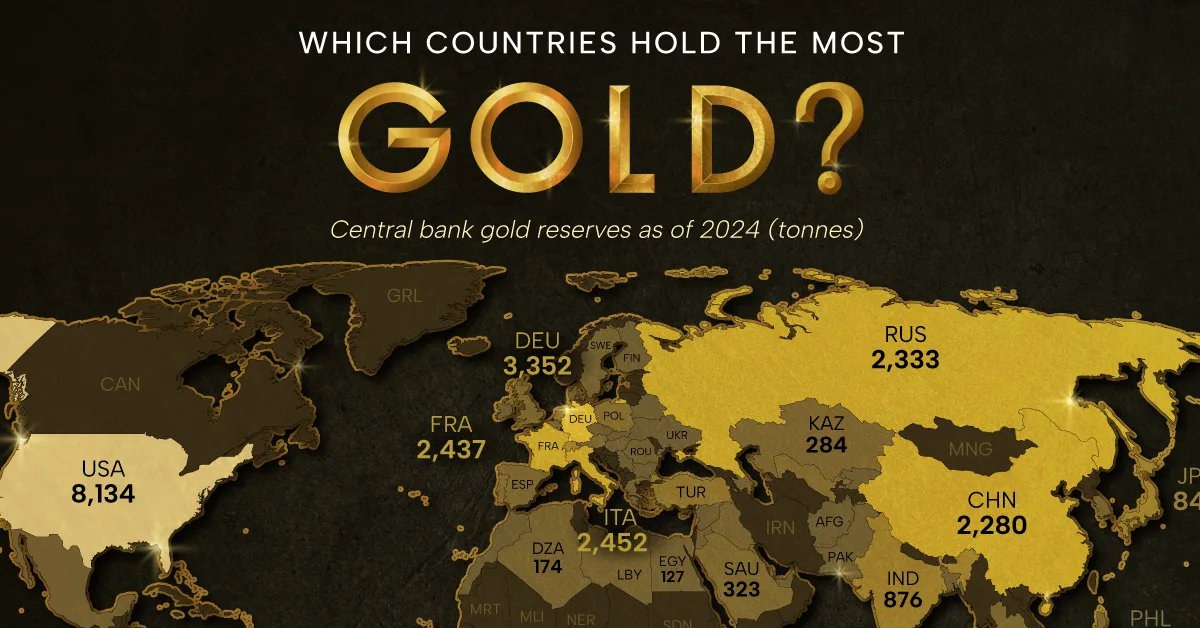
After more than doubling since the start of 2025, gold prices surged another 27% in the first month of 2026 alone.
With gold now trading above $5,500 per ounce, central bank gold reserves are worth far more than at any point in the past several decades.
This visualization highlights how much the world’s largest gold holders now control in dollar terms. The data for this visualization comes from the World Gold Council.
The rally has been driven by strong safe-haven demand, as currency volatility and a wobbling U.S. dollar push investors and policymakers toward hard assets. For central banks, higher prices strengthen reserve positions without adding a single extra tonne of gold.
The United States remains the world’s largest official holder of gold, with 8,133.5 tonnes in reserves. At $5,500 per ounce, that stockpile is worth roughly $1.44 trillion. This puts the U.S. far ahead of Germany in second place, whose gold reserves are valued at just under $600 billion.
| Rank | Country | Value of gold holdings | Gold holdings (tonnes) |
|---|---|---|---|
| 1 | United States | $1.44T | 8,133.5 |
| 2 | Germany | $592B | 3,350.3 |
| 3 | Italy | $434B | 2,451.9 |
| 4 | France | $431B | 2,437.0 |
| 5 | Russia | $411B | 2,326.5 |
| 6 | China | $408B | 2,305.4 |
| 7 | Switzerland | $184B | 1,039.9 |
| 8 | India | $156B | 880 |
| 9 | Japan | $150B | 846 |
| 10 | Türkiye | $114B | 644 |
| 11 | Netherlands | $108B | 613 |
| 12 | Poland | $96B | 543 |
| 13 | Taiwan | $75B | 424 |
| 14 | Portugal | $68B | 383 |
| 15 | Uzbekistan | $67B | 380 |
| 16 | Kazakhstan | $59B | 333 |
| 17 | Saudi Arabia | $57B | 323 |
| 18 | United Kingdom | $55B | 310 |
| 19 | Lebanon | $51B | 287 |
| 20 | Spain | $50B | 282 |
America’s large gold position reflects decades of accumulation and its historical role at the center of the global monetary system.
Germany, Italy, and France all hold more than 2,400 tonnes of gold each. At current prices, each country’s reserves are valued between $430 billion and $590 billion.
Switzerland, while smaller, also stands out. Its gold reserves are worth around $184 billion, reinforcing its reputation for financial stability and conservative reserve management.
Russia and China both hold over 2,300 tonnes of gold, with reserve values exceeding $400 billion each. In recent years, both countries have steadily increased gold purchases as a way to diversify away from U.S. dollar assets.
Emerging markets such as India, Türkiye, and Poland also feature prominently.
If you enjoyed today’s post, check out The Rise of Major Currencies Against the USD in 2025 on Voronoi, the new app from Visual Capitalist.