2025: Many Things
Mar. 27th, 2026 11:21 pm![[personal profile]](https://www.dreamwidth.org/img/silk/identity/user.png) schneefink
schneefinkIt's very late March, I know, but better late than never. Most of this was written back in December/January.
( Fannish things )
( Non-fannish things )
( Fannish things )
( Non-fannish things )
schneefink![[syndicated profile]](https://www.dreamwidth.org/img/silk/identity/feed.png) neatorama_feed
neatorama_feedThis rare instrument sounds like human voices
by u/Due-Explanation8155 in Romania_mix
Hans Reichel was an "experimental luthier" from Germany. He adapted and invented various stringed musical instruments, including, in 1987, the daxophone demonstrated above. It's an idiophone--a musical instrument in which sound is caused by vibrations through the entire body of the instrument rather than strings or membranes.
When played, the box produces sounds that resemble a human voice. Or the voice of something that used to be human before...changes took place. I don't know the origins of this specific daxophone, but Daniel Fishcan, a master woodworker, produces many and offers recordings on SoundCloud.
-via David Thompson
arlieneatorama_feed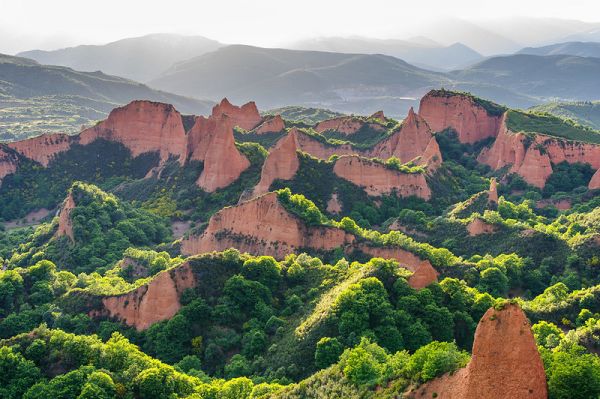
The Roman Empire mined gold in Spain by digging shafts and tunnels deep into the mountains. This yielded gold, but not as much as what came after. At the same time, they built aqueducts and diverted mountain runoff water to the hilltops. When they had enough water, they would flood the shafts and tunnels until the pressure split the mountain open! The fallen rock could then be sifted for gold. The technique was called ruina montium, or the wrecking of mountains. The tons of gold they recovered ended up stamped with Caesar's likeness, and the mountains still show the scars 2,000 years later.
The mountains shown above are Las Médulas in northwestern Spain, where the mining technique and the aqueducts still remain. It is a UNESCO World Heritage Site. Read about the wrecking of the mountains and what it left behind, with plenty of pictures, at Amusing Planet.
(Image credit: Udri/CC BY-NC-SA 2.0
yourlibrarian![[community profile]](https://www.dreamwidth.org/img/silk/identity/community.png) marchmetamatterschallenge writing prompt was "How do you define genres? Is it still a useful tool to find entertainment you like, or have offerings become so niche and melded that it's hard to use categories anymore? Was it ever something useful for you, personally?"
marchmetamatterschallenge writing prompt was "How do you define genres? Is it still a useful tool to find entertainment you like, or have offerings become so niche and melded that it's hard to use categories anymore? Was it ever something useful for you, personally?"Want to leave a Kudos?
tygerSoooo this evening my neighbour came over to let me know that we have a water leak in the front yard. (Again.) I actually saw it was super boggy yesterday, I just thought it was the rain! I mean, it's boggy out back, too, so...
Anyway, it's not the tap itself this time, but it's something around there. So I had to turn the water off at the mains, which is... less than convenient. And I'll need to call the plumber in the morning. Boooooo. (Luckily we have water in the tank again, so at least the toilets still flush!)
So, that meant I didn't get any stripping work done this evening - I do NOT want to mess with paint stripper without a ready source of water on hand in case of spills etc. But I DID do a bunch of sanding with the electric sander this afternoon, and I got a LOT done there. (I just had to stop due to noodle arms needing a break, and then it was too dark, alas.)
As it turns out the sandpaper I had on was almost at the end of its life; once it became obviously dead and I switched it out stuff went a LOT faster. So hopefully tomorrow I can get all the rest of the stuff the electric sander can reach done! And then strip the rest if possible, because even with the electric sander it takes A While to get enough paint off, so with the hand sander my arms are gonna be SO sore...
My cocoa and other baking supplies finally came today, too! Ended up taking like a week from when I ordered it, but that's okay, it's here now! So I made some more zucchini bread! I'll take a loaf over to the neighbours tomorrow in thanks, I think. :3 From the piece I had I don't think the chocolate buttons are as good as the choc chips, so next time I might smash them into bits before adding them, that might help. Experiments!!!
I really should try and flip my sleep schedule, btw. It's cold again, why am I staying awake through the coldest hours and sleeping through the warmer ones, this is stupid...
 ysabetwordsmith posting in birdfeeding
 yourivy posting in findingfriends
 forestofglorysusandennis
 andrewducker
I've seen occasional confusion from people over the last few weeks "Why is it so cold, isn't it Spring now?" - and I thought I should say a bit about one of the major causes that I almost never hear people talk about - the polar vortex.
This is a swirling wind around the Arctic that exists for basically the whole arctic night. One of the things it does is keep the freezing polar winds from coming further south in to Europe. But when it finally collapses in the Spring, it finally allows those winds out, and you get a sudden burst of cold air as all of that freezing weather escapes down to us.
Normally this happens some time in late February, but this year the collapse seems to have been a month later.
The other major factor is largely down to circulating high pressure areas (imagine slow large hurricane shaped wind "objects") that constantly move around the North Atlantic. Put one of these off of the west coast of Ireland, going clockwise, and it will pull air down from the North even further/faster. See this short video I took from the NullSchool site (my favourite wind visualisation site). In it you can see cold winds pouring down from the North Pole, funneled further by the circulation. And if you click on the link there you can see that currently the wind is instead being pulled off of the Altantic, where it's a few degrees colder.

If you'd like to read more, then this is quite good.
(And apologies to anyone who actually knows anything about the weather for any appalling mistakes I've made.)
redbird strange_maps_feed
War is hell. But war is also geometry. And geometry can be quite beautiful. Prime examples of that disturbing paradox are the so-called star forts that proliferated throughout Renaissance Europe.
Seen from above, these bastioned fortifications resemble elaborate ornamental diagrams, or perhaps even sacred mandalas. Yet their snowflake-like beauty was unintended. These were machines of war, developed from a mathematical attempt to solve a practical military problem: how to defend an army or a city from enemy artillery.

Foundational to fortification theory was Jean Errard’s 1594 treatise La fortification réduicte en art et démonstrée, in which the French mathematician and engineer used geometry to formalize military architecture, helping to transform fort-building from a traditional craft into a discipline grounded in mathematics.
The resulting star forts (so called because of their multiple fortified extrusions) solved a technological crisis. Medieval fortresses, built to withstand ladders, catapults, and siege engines, were no match for gunpowder-powered artillery, the 15th century’s major military innovation. A cannon could easily take out vertical masonry walls that had stood unconquered for centuries.

Military engineers resorted to building lower, thicker ramparts, backed by earth, and sought to eliminate blind spots by building angular bastions — the aforementioned extrusions. Star fortifications started in Italy, were perfected in France (especially by the prolific Vauban), and dominated the European military scene for the entire 17th and 18th centuries, giving Europe’s strategic cities and landscapes a distinctive architectural look.
Despite their sophistication, star forts eventually became obsolete, undone by the very problem they once solved. Technological advances such as explosive shells and rifled cannon greatly increased the range and destructive power of artillery, rendering their ramparts increasingly ineffective. Additionally, military strategy shifted away from static defenses toward highly mobile field armies.

By the 19th century, star forts had lost their military purpose. Many were dismantled to let the cities they once protected grow beyond their historic walls. Ironically, once relieved from their purely militaristic duties, star forts revealed their aesthetic value. That is why many of these geometric landscape features were eventually preserved as monuments or converted into parks.
While the star fort’s aesthetic appeal is immaterial to its (erstwhile) military purpose, its beauty is not mysterious or accidental: It arises precisely from its strict adherence to geometric logic. Symmetry, repetition, and radial balance are powerfully pleasing principles in human perception. When military engineers pursued these features for practical purposes, they inadvertently produced structures that resonate with the same mathematical harmony as other Renaissance art and architecture.

We’re no longer designing star forts, but accidental beauty still emerges from rational design, be it airplanes, designed to be aerodynamic; bridges, engineered to last; and even digital networks, built for efficiency. When we optimize structures for functionality, the resulting forms often exhibit unexpected elegance.
Or, to summarize that in the fewest words possible: beauty is an emergent property of rational design. No-nonsense military builders like Errard and his ilk would no doubt have appreciated the pithiness of the phrase.

Strange Maps #1286
Got a strange map? Let me know at strangemaps@gmail.com
Follow Strange Maps on X and Facebook
This article Militarized snowflakes: The accidental beauty of Renaissance star forts is featured on Big Think.
ragdoll posting in addme_fandomragdoll
 dolorosa_12pauraque
 schneefink - 2025: Many Thingsneatorama_feed - This Musical Instrument Sounds Like Unearthly Horrors Breaking into the Human Realmarlie - I hate being my own tech supportshadaras in fandomcalendar - Multifandom: Remix Through the Seasons: Spring 2026xkcd_feed - Satellite Pollutionneatorama_feed - Mining Gold by Splitting a Mountain in Halfyourlibrarian - Feeling the Ughtyger - Well I wasn't expecting THATysabetwordsmith in birdfeeding - Birdfeedingyourivy in findingfriends - O hai there!forestofglory - Media Roundup: Awesome Girls!susandennis - Good news - bad newsandrewducker - Behold - The Polar Vortex!hughville in abc_onceupon - March 27, 2026redbird - credit card crapmuccamukk - At Laststrange_maps_feed - Militarized snowflakes: The accidental beauty of Renaissance star fortsragdoll in addme_fandom - Hello, it's medolorosa_12 - Friday open thread: icebreaker questionspauraque - Dangeresque: The Roomisode Triungulate (2023)sforzindatimeasmymeasure